







큰 과학 연구 기관
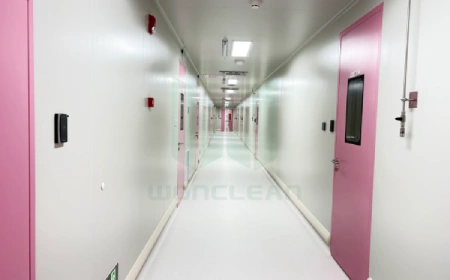
다사용자, 다분야 연구 환경을 위한 클린룸 장비 엔지니어링
1. 프로젝트 개요
A large scientific research institute—comprising multiple departments such as molecular biology, nanotechnology, advanced materials, and pharmaceutical sciences—initiated a major infrastructure upgrade to centralize its high‑containment and high‑sensitivity research capabilities. The institute required a flexible, scalable cleanroom facility capable of supporting diverse research activities ranging from 세포 배양 및 바이러스 세세세포 세세세포 생산 & nbsp;에 nanofabrication and analytical chemistry.
Unlike a single‑owner pharmaceutical company, the institute hosts dozens of independent research groups, each with varying cleanliness, safety, and equipment requirements. The primary challenge was to design a shared cleanroom equipment ecosystem that could serve multiple users without cross‑interference, while maintaining compliance with institutional biosafety levels (BSL‑2 and BSL‑3) and ISO 14644 standards.
2. Client Requirements
-
다중 사용자 유연성: & nbsp;다양한 연구 프로토콜에 대해 재구성할 수 있는 클린룸 구역 (예를 들어, 세포 작업 1 주, 나노 입자 합성 다음).
-
Segregated Containment: Isolated modules for BSL‑2, BSL‑3, and low‑humidity nanofabrication processes, each with dedicated HVAC and airlock systems.
-
High Reliability & Uptime: & nbsp;연구 중단시간을 피하기 위해 冗余 클린룸 장비를 사용하여 24/7/365 운영.
-
Energy Efficiency: Given the large footprint (3,500 m²), the institute demanded low‑energy cleanroom HVAC and filtration solutions.
-
Training & Accessibility: & nbsp;회전하는 학생, 박사 후 및 방문 과학자들에 의해 쉽게 작동하도록 설계된 장비 인터페이스.
3. Cleanroom Equipment Engineering Solution
Our engineering team delivered a centralized cleanroom equipment package tailored to a multi‑tenant research environment:
A. 지역화된 HVAC 및 여과기
-
Dedicated AHU per cleanroom class: Separate air handling units for ISO Class 5, Class 6, and Class 7 zones.
-
HEPA/ULPA 필터 은행: & nbsp;연구 등급의 단방향 또는 비 단방향 패턴을 위한 조절 가능한 공기 흐름을 가진 천장 장착 필터 모듈.
-
Low‑velocity displacement ventilation in low‑turbulence zones (e.g., for electron microscopy prep).
B. 모듈형 클린룸 건축
-
Demountable hardwall panels: Allow reconfiguration of lab layouts without structural modifications.
-
Color‑coded modular walls: Visual differentiation of cleanliness levels (e.g., white = ISO 7, blue = ISO 6, yellow = BSL‑3).
-
Interlocked pass‑through autoclaves and chemical dunk tanks: For safe material transfer between containment levels.
C. 공유 컨테인먼트 및 프로세스 장비
-
Multiple Class II Type A2 biosafety cabinets (BSCs): Each equipped with individual monitoring but connected to a common exhaust plenum.
-
휴대용 글로브박스 분리기: For oxygen/moisture‑sensitive materials research.
-
중앙 진공 및 가스 시스템: & nbsp;스테인리스 스틸 매니폴드를 통해 분배되는 매우 높은 순수성 질소, 아르곤 및 깨끗한 건조 공기.
D. Central Monitoring & Access Control
-
방별 EMS/BMS: & nbsp;실시간 압력, 입자 수, 온도, RH 및 문 연결 상태.
-
RFID‑based access system: Restricts users to authorized cleanroom classes and records usage for billing/accountability.
-
Visual alarm beacons & nbsp;각 입력에서 빠른 압력 카스케이드 오류 알림을 제공합니다.
4. Key Engineering Challenges & Solutions
| Challenge | Solution |
|---|---|
| Preventing cross‑contamination between BSL‑2 and BSL‑3 zones | Physical separation + cascading negative pressure (−25 Pa to −50 Pa) + dedicated BIBO filter housings |
| Supporting high‑heat equipment (furnaces, reactors) inside cleanrooms | Local exhaust connections + water‑cooled equipment enclosures + supplementary chilled beams |
| User‑induced contamination (multiple researchers per day) | Mandatory gowning rooms with air showers + sticky mats at each entrance + routine ATP surface testing |
| 민감한 도구에 영향을 미치는 근처 발 교통의 진동 | AFM, TEM 및 마이크로 균형을 위한 분리된 콘크리트 비성 블록 |
5. Validation & Compliance
모든 클린룸 장비는 & nbsp;ISO 14644‑1:2015 & nbsp;기관 생물 안전 요구 사항:
-
DQ: Simulated multi‑user scenarios (e.g., simultaneous cell culture and nanoparticle synthesis).
-
IQ: & nbsp;유틸리티 연결, 필터 인증 및 장비 설치 확인.
-
OQ: Tested air change rates (20–60 ACH depending on class), pressure cascades, and recovery time (<15 min to ISO Class 5).
-
PQ: Three months of dynamic monitoring with actual research protocols, including microbial air sampling.
결과: & nbsp;연구소는 완전한 운영 인증을 받았습니다 zero cross‑contamination events during the validation period.
6. Project Outcome
-
Cleanroom Area: 3,500 m² (ISO 5: 400 m², ISO 6: 1,200 m², ISO 7: 1,900 m²)
-
사용자 용량: & nbsp;28개의 독립적인 실험실 모듈에서 하루에 최대 150명의 연구원
-
Energy Savings: & nbsp;변속 팬과 수요에 따라 제어된 환기를 통해 HVAC 에너지를 32% 줄입니다.
-
이용 비율: >85% within six months of opening, accommodating 12 research groups from 4 faculties
The research institute now operates a 진정으로 공유되고 고성능 클린룸 코어 시설오염 또는 감지 충돌으로 인해 이전에 불가능한 학제 간 프로젝트를 가능하게 합니다.
7. 결론
For large scientific research institutes, cleanroom equipment engineering must prioritize flexibility, segregation, and user‑centric design far more than in a dedicated pharmaceutical facility. This project demonstrates that with zoned HVAC, modular hardwall architecture, and centralized monitoring, a single cleanroom complex can safely serve hundreds of researchers across BSL‑2, BSL‑3, and nanofabrication disciplines—while maintaining ISO Class 5 integrity and energy efficiency.