






연락처
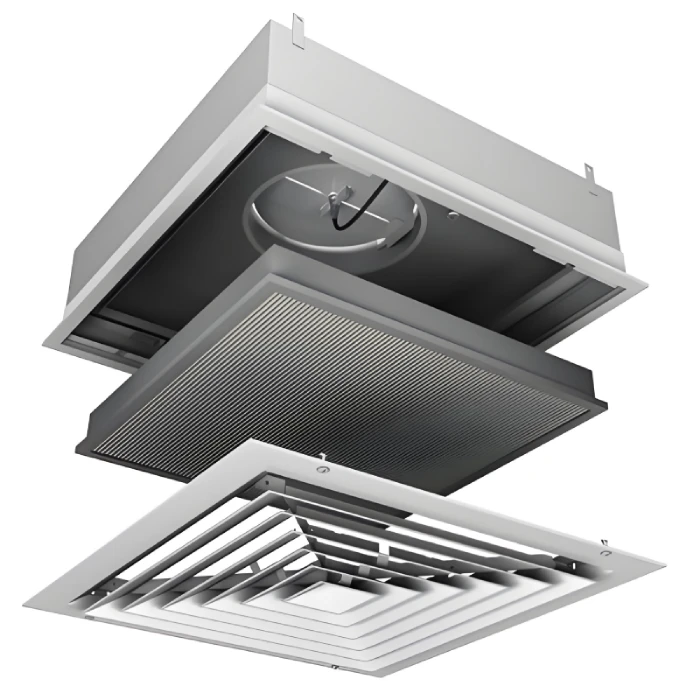
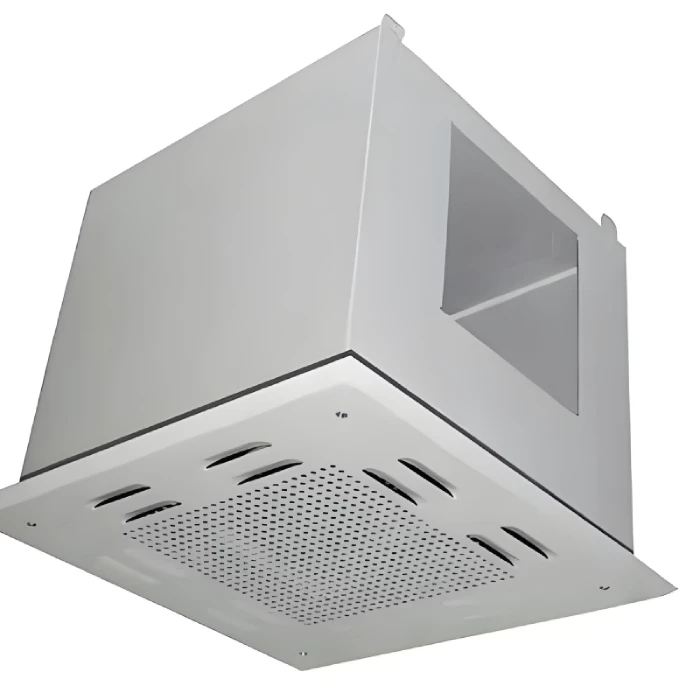
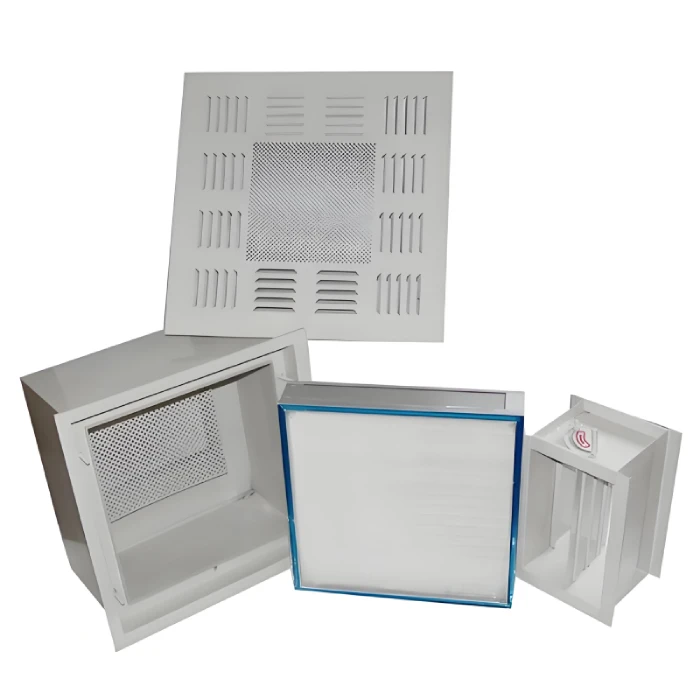
고효율 공기 출구
개요:
HEPA 공기 출구로도 알려진 고효율 공기 출구는 클린룸 HVAC 정화 시스템의 터미널 공기 공급 장치입니다.클린룸 천장에 설치된 고효율 필터가 있으며 처리된 깨끗한 공기를 클린룸으로 균일하게 전달합니다.클린룸 청소 수준을 유지하는 주요 장비 구성 요소 중 하나입니다. 고효율 공기 출구는 일반적으로 고고통 시스템 및 공기 처리 단위와 함께 사용됩니다.그들은 ISO 클래스 5에서 ISO 클래스 8까지의 클린룸 환경에 적합하며 제약, 생물 기술, 전자 제조, 병원 및 식품 가공 산업에서 널리 사용됩니다.
키워드:
세부 정보:
1. 제품 개요
HEPA 공기 출구로도 알려진 고효율 공기 출구는 클린룸 HVAC 정화 시스템의 터미널 공기 공급 장치입니다.클린룸 천장에 설치된 고효율 필터가 있으며 처리된 깨끗한 공기를 클린룸으로 균일하게 전달합니다.클린룸 청소 수준을 유지하는 주요 장비 구성 요소 중 하나입니다.
High Efficiency Air Outlets are typically used in conjunction with duct systems and air handling units. They are suitable for cleanroom environments ranging from ISO Class 5 to ISO Class 8 and are widely used in pharmaceutical, biotechnology, electronics manufacturing, hospital, and food processing industries.
2. Working Principle
The working principle of the High Efficiency Air Outlet is based on a combination of centralized air supply and terminal filtration.
First, Air Source Supply. A central air handling unit or fan provides air that has passed through preliminary and medium-efficiency filters. This air is delivered to each High Efficiency Air Outlet through supply ducts.
Second, Terminal Filtration. Air enters the High Efficiency Air Outlet and passes through the built-in HEPA or ULPA filter, where airborne particles, bacteria, dust, and other contaminants are efficiently captured.
Third, Uniform Air Supply. The filtered clean air passes through the diffuser plate or airflow uniforming device at the outlet and is delivered into the cleanroom at a uniform velocity and direction, creating the required airflow pattern.
Fourth, Pressure Differential Maintenance. The High Efficiency Air Outlet works together with return air outlets to establish and maintain the required pressure differential gradient within the cleanroom, preventing contaminants from migrating from lower cleanliness areas to higher cleanliness areas.
3. Product Structure and Components
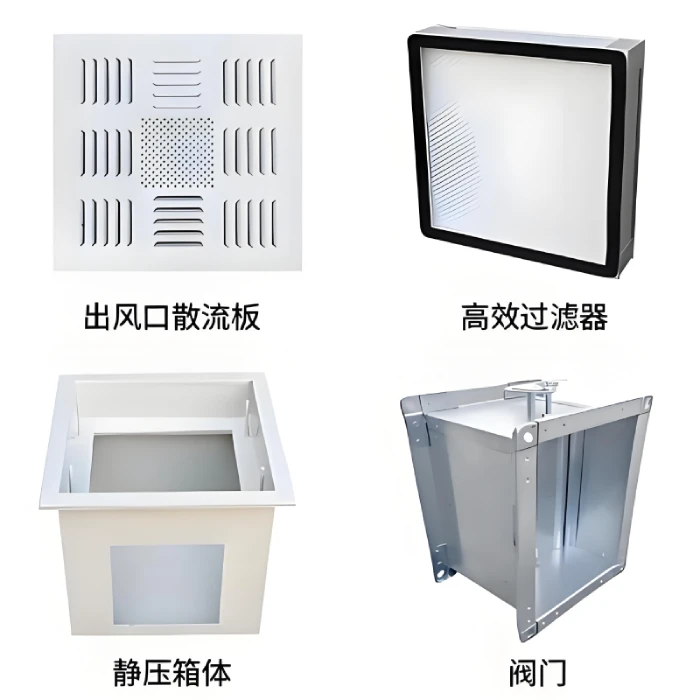
The High Efficiency Air Outlet consists of the following core components:
Housing: Manufactured from high-quality cold-rolled steel sheet or stainless steel sheet, with electrostatic spray or powder coating finish for good corrosion resistance and aesthetic appearance. The housing is designed to be airtight.
High Efficiency Filter: The core filtration component, including HEPA filters (99.97% or higher efficiency for 0.3 micron particles) and ULPA filters (99.999% or higher efficiency for 0.12 micron particles). Filters can be of the separated or mini-pleat type.
Diffuser Plate: Installed at the air outlet face, typically made of aluminum alloy or stainless steel, with uniformly distributed small holes or slots to ensure even distribution of supplied air.
Air Volume Control Damper: Installed at the air inlet end of the outlet, used to adjust the air volume delivered into the cleanroom, allowing adjustment of air change rates and pressure differential based on actual requirements.
Sealing Device: Includes sealing gaskets between the housing and the ceiling, and sealing strips between the filter and the housing, ensuring the system is airtight.
Pressure Differential Test Port: Used to connect a pressure gauge, facilitating monitoring of filter resistance changes to determine when filter replacement is needed.
Insulation Layer: Some models have an insulation layer on the exterior of the housing to prevent condensation during air conditioning operation.
4. Features and Advantages
First, High Filtration Efficiency. Built-in HEPA or ULPA filters efficiently remove microscopic airborne particles, ensuring supply air cleanliness meets cleanroom requirements.
Second, Uniform Air Distribution. Optimized diffuser plate design provides uniform and stable air supply, minimizing turbulence and dead zones, helping maintain cleanroom cleanliness.
셋째, 컴팩트 구조.주택은 소형이며 최소한의 천장 공간을 차지하고 있으며, 제한된 오버헤드 공간이 있는 건물에 적합합니다.
셋째, 쉬운 설치.표준화된 인터페이스 치수와 설치 방법은 일반적인 표표본 표표준화된 인터페이스 치수와 설치 방법을 통해 일반적인 표표표준화된 표표표준화된 인터페이스 치수와 설치 방법
Fifth, Convenient Maintenance. Filters can be replaced from inside the cleanroom or from above the ceiling. Some models feature side-pull or bottom-pull designs for simple replacement.
Sixth, Adjustable Air Volume. Equipped with an air volume control damper, allowing flexible adjustment of supply air volume based on actual cleanroom requirements.
Seventh, Good Sealing Performance. Multiple sealing designs ensure system airtightness, preventing unfiltered air from leaking into the cleanroom through gaps.
여섯째, 고품질 재료.주택은 고급 표면 처리를 가진 고품질 강철으로 제조되어 있으며 내식성, 쉽게 청소, 미적 외관 및 내구성을 제공합니다.
5. 기술 사양 (표준)
Housing Material: Cold-rolled steel sheet or stainless steel sheet (304 or 316L)
Surface Finish: Electrostatic spray coating or powder coating
Standard Dimensions (Width × Height × Depth): Various standard sizes available, such as 600×600×500mm, 750×750×500mm, 900×600×500mm, and customizable
High Efficiency Filter Type: HEPA filter or ULPA filter
HEPA Filtration Efficiency: 99.97% or higher for 0.3 micron particles
ULPA 여과 효율성: 0.12 미크론 입자를 위한 99.999% 이상
정격 공기 흐름: 시간당 500 ~ 3000 입방미터 (크기와 모델에 따라 다릅니다)
Face Velocity: 0.45 to 1.5 meters per second (adjustable)
Diffuser Plate Material: Aluminum alloy or stainless steel
Air Volume Control Damper: Opposed blade multi-leaf damper or single-leaf damper
Sealing Method: Gasket seal or gel seal
Operating Temperature: 0 to 40 degrees Celsius
Operating Humidity: Less than 95% relative humidity
Installation Method: Recessed ceiling-mounted
6. Product Classification
By Filter Type: HEPA High Efficiency Air Outlet, equipped with HEPA filter, suitable for conventional cleanroom environments. ULPA High Efficiency Air Outlet, equipped with ULPA filter, suitable for higher cleanliness requirements above ISO Class 5.
By Material: Carbon Steel High Efficiency Air Outlet, housing made of cold-rolled steel with powder coating, economical and practical. Stainless Steel High Efficiency Air Outlet, housing made of 304 or 316L stainless steel, highly corrosion-resistant, suitable for humid or corrosive environments.
By Installation Method: Ceiling Supply Type, standard installation with air supplied downward from ceiling. Side Supply Type, wall-mounted, suitable for special airflow pattern requirements.
By Diffuser Type: Perforated Plate Diffuser, featuring uniformly distributed round holes for even air dispersion. Louvered Diffuser, featuring adjustable louvers for airflow direction control.
By Sealing Method: Gasket Seal Type, using sealing gasket between filter and housing, lower cost. Gel Seal Type, using gel seal technology for superior airtightness, suitable for applications with extremely high sealing requirements.
By Insulation: Non-Insulated Type, without insulation layer. Insulated Type, with insulation layer on housing exterior to prevent condensation.
7. Application Areas
High Efficiency Air Outlets are widely used in various locations with strict air cleanliness requirements.
제약 산업: GMP 요구 사항을 준수하는 약물 생산 워크제제제장, 살균 준비 워크제장, API 정화 및 포장 워크제장, 품질 관리 실험실에서 사용됩니다.고효율 공기 출구는 제약 생산 중 공기 품질이 지정된 표준을 충족시키도록 깨끗한 공기를 제공합니다.
Biotechnology and Life Sciences: Used in biological laboratories, cell culture rooms, genetic laboratories, microbiology testing rooms, etc., preventing airborne microorganisms and particles from contaminating experimental samples and cultures.
Semiconductor and Electronics Manufacturing: Used in chip fabrication workshops, wafer processing areas, LCD panel production workshops, precision electronic component assembly lines, etc., providing high-cleanliness air environments to prevent microscopic particles from causing defects in electronic components.
Hospitals and Medical Facilities: Used in operating rooms, ICU wards, sterile treatment rooms, central sterile supply departments, isolation wards, etc. High Efficiency Air Outlets provide clean air to reduce hospital infection risks and protect patients and medical staff.
Food and Beverage Processing: Used in food packaging workshops, dairy filling lines, beverage production workshops, meat processing workshops, etc., preventing airborne microorganisms from contaminating food products and extending product shelf life.
정밀 계기 및 광학 제조: 렌즈 조립 작업장, 정밀 계기 교정 실, 광학 코팅 작업장 등에서 사용되며, 정밀 계기 및 광학 부품을 오염으로부터 보호하기 위해 먼지 없는 환경을 제공합니다.
Laboratories and R&D Centers: Used in chemical laboratories, physics laboratories, materials science laboratories, analytical testing centers, etc., protecting experimental samples and precision instruments from airborne particle interference.
Medical Device Manufacturing: Used in medical device production workshops, implant manufacturing workshops, single-use sterile device packaging workshops, etc., ensuring products are not contaminated by microorganisms during production.
Cosmetics Production: Used in cosmetics filling workshops, emulsifying workshops, packaging workshops, etc., preventing airborne microorganisms from contaminating cosmetics and ensuring product quality and safety.
데이터 센터 및 컴퓨터 룸: 서버 룸, 통신 룸, 제어 센터 등에서 사용됩니다.고효율 공기 출구는 장비 운영에 필요한 깨끗한 환경과 온도 제어를 유지하는 데 도움이 됩니다.
동물 주거 시설: SPF 동물 방, 실험 동물 센터, 동물 수술 방 등에서 사용되어 공기 전달 병원체가 동물 주거 지역에 들어오지 않도록 방지하고 실험 동물의 건강을 보호합니다.
Aerospace and Defense: Used in spacecraft assembly workshops, precision navigation equipment manufacturing workshops, weapons system maintenance workshops, and other applications with special cleanliness requirements.
8. Comparison with Other Cleanroom Equipment
High Efficiency Air Outlet vs. FFU: The High Efficiency Air Outlet does not contain an integrated fan and relies on a central HVAC system for air supply power. FFUs have a built-in fan and can operate independently. High Efficiency Air Outlets are suitable for new large-scale cleanroom projects with lower initial investment. FFUs are suitable for renovation projects and applications requiring independent airflow control.
고효율 공기 출구 vs 팬 필터 박스: 팬 필터 박스는 일반적으로 팬과 필터를 완전한 공기 공급 단위로 포함합니다.고효율 공기 출구는 단지 최종 장치이며 작동하기 위해 외부 팬이 필요합니다.고효율 공기 출구는 더 간단한 구조와 낮은 유지 보수 비용을 가지고 있습니다.
High Efficiency Air Outlet vs. Standard Diffuser: Standard diffusers do not have filtration capability and only serve to distribute airflow. The High Efficiency Air Outlet provides both diffusion and high-efficiency filtration, making it a dedicated air supply device for cleanrooms.
9. Selection Guide
Cleanliness Requirement: Select the appropriate High Efficiency Air Outlet based on the required ISO cleanliness class. For ISO Class 5 and above, ULPA filters are recommended. For ISO Class 6 to Class 8, HEPA filters are suitable.
Airflow Requirement: Calculate the total supply air volume based on cleanroom area, height, and required air change rate. Determine the number of High Efficiency Air Outlets needed and the rated airflow per outlet.
Installation Space: Measure the ceiling plenum height and select a housing of appropriate height. For limited space, choose a low-profile High Efficiency Air Outlet.
Material Selection: For normal dry environments, carbon steel with powder coating is suitable. For humid environments or locations with corrosive gases, choose stainless steel housing.
실링 요구 사항: 높은 방공성 요구 사항을 가진 응용 프로그램 (생물 안전 실험실, 살균 제약 작업장 등) 의 경우 밀밀봉밀봉 밀봉 유형 밀밀봉 밀봉 유형 고효율 공기 출구가 권장됩니다.
Diffuser 유형: 높은 공기 흐름 균일성을 요구하는 응용 프로그램에 대해, 구부된 플레이트 Diffuser를 선택하십시오.조절 가능한 공기 흐름 방향을 필요로 하는 응용 프로그램의 경우, 루버 디퍼서를 선택하십시오.
Maintenance Convenience: Consider the workspace available for filter replacement and select a model that can be serviced from inside the cleanroom or from above the ceiling.
준수 요구 사항: 제약 산업은 GMP 요구 사항을 준수하는 고효율 공기 출구를 선택해야 하며, 일반적으로 재료 인증서와 공장 시험 보고서가 필요합니다.
10. Installation and Maintenance
Installation Key Points: Before installation, check that the ceiling opening dimensions match the air outlet. Install supply ducts in the ceiling plenum, ensuring good duct sealing. Insert the High Efficiency Air Outlet housing into the ceiling opening, using sealing gaskets to seal against the ceiling. Connect the supply duct to the air outlet inlet, using flanges and sealing gaskets to ensure leak-free connections. Install the high-efficiency filter, ensuring correct orientation and proper sealing. Install the diffuser plate. Connect pressure differential test tubing. Perform system commissioning to test air supply volume and pressure differential.
Filter Replacement Procedure: Turn off the HVAC system or close the corresponding air outlet damper. Remove the diffuser plate. Remove the old filter from the housing. Clean the filter mounting frame and sealing surfaces. Install the new filter, ensuring the sealing gasket is evenly compressed. Reinstall the diffuser plate. Restart the system and perform airflow velocity and pressure differential tests. Record the filter replacement date and pressure differential reading.
Daily Maintenance: Regularly observe the pressure gauge reading. When the pressure differential reaches twice the initial resistance, filter replacement is required. Regularly clean the diffuser plate surface to prevent dust accumulation from affecting airflow distribution. Check sealing points for air leakage. Periodically conduct airflow velocity tests to ensure supply air volume meets design requirements. Periodically conduct filter integrity tests (PAO leak testing) to verify no filter leakage.
Common Troubleshooting: If supply air volume is insufficient, check whether the air volume control damper is fully open, whether the filter is clogged, or whether the supply duct is leaking. If air supply is uneven, check whether the diffuser plate is clogged or improperly leveled. If pressure differential is too high, the filter is clogged and requires replacement. If condensation occurs on the housing, check whether the insulation layer is intact or whether the supply air temperature is too low.
자주 묻는 질문
- 1 이중 유리 창문 패널은 어떻게 lithography 영역에서 클린룸 성능을 향상시킬 수 있습니까?
- 2 어떤 산업이 FFU를 사용합니까?
- 3 팬 필터 유닛(FFU)은 무엇입니까?
- 4 시설 설계에서 클린 부스의 기능은 무엇입니까?
- 5 에어 샤워룸은 어떻게 인원 입장 프로토콜을 관리합니까?
- 6 대규모 화물 소염에 대한 솔루션은 무엇입니까?
- 7 클린룸 시스템에서 공기 분배는 어떻게 관리되나요?
- 8 클린 부스 시스템의 분류를 정의하는 것은 무엇입니까?
- 9 공기 샤워룸은 어떻게 오염 통제를 향상시킬 수 있습니까?
- 10 모듈형 청소 지역에서 공기 흐름의 일관성을 유지하는 방법은 무엇입니까?
1
이중 유리 창문 패널은 어떻게 lithography 영역에서 클린룸 성능을 향상시킬 수 있습니까?
Double glass window panes 중요한 열, 음성 및 입자 분리를 제공합니다.밀봉된 아르곤 또는 크립턴 채우기는 뷰포트에서 대역 전류를 최소화합니다.라미너 흐름을 방해할 수 있는 지역화된 혼란을 방지합니다.전도성 코팅은 정적 분산을 가능하게 하지만 박판형 구조는 충격 및 화재 등급 요구 사항을 충족합니다.실제로, 그들은 관찰 지점을 통해 입자 침입을 > 줄입니다.단일 패널 대안과 비교하여 90%이며 ISO 클래스 3/4 경계를 통해 안정적인 차압을 지원합니다.
2
어떤 산업이 FFU를 사용합니까?
반도체 생산 라인 (입자 민감), 생물 의학 연구 실험실, 제약 제조 및 정확한 공기 흐름, 속도 및 소음 수준 제어가 필요한 모든 통제 환경.
3
팬 필터 유닛(FFU)은 무엇입니까?
FFU는 팬과 HEPA 또는 ULPA 필터를 단일 하우징에 결합하는 모듈식 공기 정화 장치입니다.그것은 지역화된 깨끗한 공기 공급을 제공하고 클린룸 오염 통제에 기본적입니다.
4
시설 설계에서 클린 부스의 기능은 무엇입니까?
A Clean Booth는 더 큰 방 내에서 지역화된 깨끗한 환경을 제공합니다.그것은 cleanroom 팬 필터 단위 (FFU) 를 사용하여 긍정적인 압력을 유지하고 공기 입자를 필터 합니다.이 유형의 클린룸 로컬 클린 장비는 완전한 클린룸을 구축하지 않고 ISO 클래스 5 또는 그 이상의 조건을 요구하는 프로세스에 필수적입니다.설치는 오염 통제가 필요한 특정 워크스테이션에 대해 유연하고 비용 효율적입니다.
5
에어 샤워룸은 어떻게 인원 입장 프로토콜을 관리합니까?
인원 입장은 엄격한 소염을 요구합니다. cleanroom Single-Person Air Shower Room은 개인 접근을 위해 설계되었으며, cleanroom Multi-Person Air Shower Room은 더 많은 교통량을 처리합니다.일반적인 클린룸 공기 샤워룸은 중요한 영역에 들어가기 전에 의류에서 입자를 제거하기 위해 고속 공기를 사용합니다.적절한 연결 시스템은 문을 동시에 열지 않도록 보장하고 압력 차이와 청소 표준을 효과적으로 유지합니다.
6
대규모 화물 소염에 대한 솔루션은 무엇입니까?
대형 항목은 전문 소염 채널이 필요합니다. 클린룸 카고 에어 샤워룸은 시설에 들어오는 팔레트와 대형 장비를 수용합니다.지속적인 흐름은 대량 물류를 위해 클린룸 상품 공기 샤워 터널을 통해 관리됩니다.작은 항목은 내구성과 내식성을 제공하는 클린룸 알루미늄 패스 박스를 통해 통과합니다.이러한 시스템은 물질 운송 작업 중에 외부 오염물이 내부 환경을 손상시키지 않습니다.
7
클린룸 시스템에서 공기 분배는 어떻게 관리되나요?
공기 분배는 청결성 수준을 결정합니다. 클린룸 공기 공급 장치는 공간 내의 볼륨과 압력을 조절합니다.여과된 공기는 클린룸 고효율 공기 출구를 통해 분산되어 혼란없이 균일한 커버리지를 보장합니다.모듈식 설정은 종종 cleanroom 클린 패널 클린 부스를 사용하여 이러한 구성 요소를 원활하게 통합합니다.적절한 설계는 규제 준수 표준을 충족시키기 위해 시간당 일관된 공기 변경을 보장합니다.
8
클린 부스 시스템의 분류를 정의하는 것은 무엇입니까?
분류는 공기 청결도 수준에 따라 달라집니다. 클린 부스는 ISO 클래스 5 환경을 지역화합니다. 클린룸 팬 필터 유닛(FFU)과 통합하여 일관된 공기 흐름을 보장합니다. 클린룸 고효율 공기 출구의 정기적인 유지 보수는 작업 공간 내에서 입자 제어 표준을 유지하는 데 매우 중요합니다.
9
공기 샤워룸은 어떻게 오염 통제를 향상시킬 수 있습니까?
인원 입장은 엄격한 소염을 요구합니다. cleanroom Single-Person Air Shower Room는 입장하기 전에 복장에서 입자를 제거합니다.더 큰 그룹의 경우, 클린룸 다인 공기 샤워룸은 효율적으로 처리량을 증가시킵니다.화물 운송은 클린룸 화물 공기 샤워룸을 사용하여 재료 이동 중에 외부 오염물이 중요한 생산 영역에 들어오지 않도록 합니다.
10
모듈형 청소 지역에서 공기 흐름의 일관성을 유지하는 방법은 무엇입니까?
적절한 공기 흐름을 유지하는 것은 오염 통제에 매우 중요합니다. 클린룸 팬 필터 유닛(FFU)은 작업 공간 전반에 동일한 분포를 보장합니다. 클린룸 클린 부스와 통합하면 ISO 클래스 5 환경을 지역화합니다.또한 클린룸 고효율 공기 출구를 설치하면 배기 및 압력 차이를 효과적으로 관리할 수 있습니다.운영 무결성을 손상시키지 않고 성능 표준을 유지하기 위해 정기적인 필터 검사가 필요합니다.